At a glance
Polynesian Day (Poly Day) is an annual event hosted by UW’s Polynesian Student Alliance that celebrates and uplifts Pacific… Read full summary
- Funding received
- 2025-2026
- Large
- Awarded
- $6,460
- Funding partners
-
- Services and Activities Fee (SAF)
- Website & social links
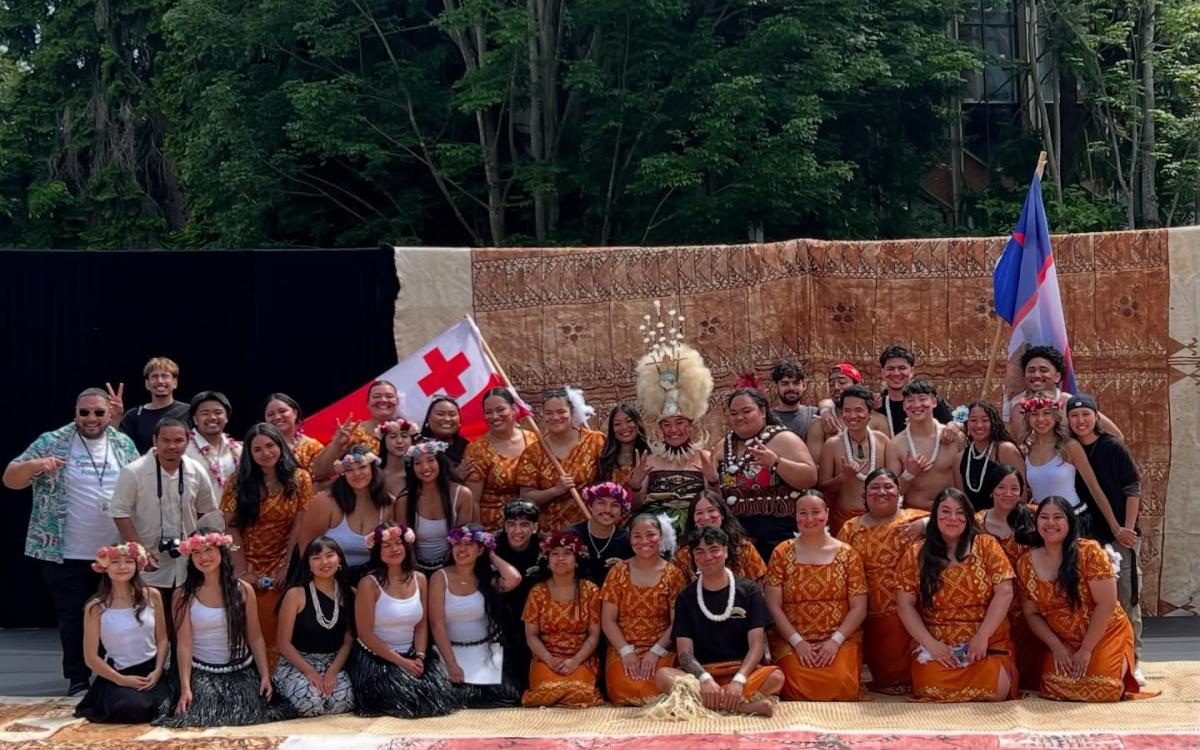
Polynesian Day (Poly Day) is an annual event hosted by UW’s Polynesian Student Alliance that celebrates and uplifts Pacific Islander culture through performances, workshops, and panels led by students, faculty, and community members. The event highlights cultural traditions, identity, and pathways to higher education. With Pacific Islanders representing less than 1% of UW’s student body, Poly Day creates space for visibility and representation. Through outreach to Pacific Islander high school clubs across the PNW, the event supports future generations in accessing and navigating higher education. Funds will be used for HUB lawn/room reservations, stage rentals, and stipends for a DJ and emcee.
Polynesian Day, formally known as Poly Day, is an annual event and celebration of Pacific Islander culture hosted by the University of Washington's Polynesian Student Alliance (PSA). The event captures the contributions and communities of Pacific Islanders at UW fostering cultural sustainability and community engagement. Poly Day promotes the presence and preservation of Pacific Islander traditions and heritages through cultural performances, workshops, and panels. Both workshops and panels are led by Pacific Islander students, faculty, and community members, covering cultural history, identity, and pathways to higher education. Cultural performances include performances from UW's PSA, UW's Micronesian Islands Club (MIC), and UW's Hui Hoaloha 'Ulana club.
Often, PI communities and their cultures are overlooked or unnoticed in academic spaces and issues. This event aims to represent our underrepresented communities in higher education, as the percentage for the Pacific Islander student body at UW is lower than 1%. Poly Day contribute to this advocation for PI representation by it's outreach efforts to high school PI clubs in the PNW area. Through PSA's Polynesian Outreach Program (POP), Poly Day attendees include the various PI clubs that PSA fosters a relationship and mentorship with throughout the year. Through shared efforts from students, faculty and community members, Poly Day serves as a sustainable gathering that showcases the importance of representation in academics and how PI heritages and cultures can be used in those spaces through cultural sustainability.
Ruta Lemisio
Project lead
- rlemisio@uw.edu
- Affiliation
- Student
- Years
- 2 years year(s) remaining at UW
- Affiliated groups
- Polynesian Student Alliance
Savannah Tautolo
Team member
- stautolo@uw.edu
- Affiliation
- Student
- Years
- 2 years year(s) remaining at UW
- Affiliated groups
- Polynesian Student Alliance
Brendan Chang
Team member
- brech@uw.edu
- Affiliation
- Staff
- Affiliated groups
- Student Activities Office
Cass Nguyen
Team member
- cassn@uw.edu
- Affiliation
- Staff
- Affiliated groups
- Ethnic Cultural Center
Manakoniu Kamoto
Team member
- mkamoto@uw.edu
- Affiliation
- Student
- Years
- 2 years year(s) remaining at UW
- Affiliated groups
- Polynesian Student Alliance
Summary of Poly Day:
Polynesian Day, known as Poly Day, isn’t just a cultural celebration, it’s a cultural homecoming for Pasifika individuals and their people. Poly Day is a yearly event that celebrates the excellence and strengths of Pacific Islander culture, hosted by UW’s Polynesian Student Alliance (PSA), which has been active for 26 years. The event includes workshops, discussion panels, and live cultural performances that showcase Pacific Islander traditions and heritages. Poly Day includes performances from PSA, the Micronesian Islands Club (MIC), and Hu’i Hoaloha ‘Ulana. This event enhances the networking between UW Students and the broader Pacific Islander community in WA, as its workshops and discussion panels are led by students, staff, and faculty members. Poly Day serves as a wide ranging sustainable gathering, highlighting the importance and livelihood of Pacific Islander backgrounds and representation in an academic lens. The event has continued for over 20 years, with PSA being 26 years old, and has then continued maintaining community connection and cultural knowledge.
Sustainable Impact:
As one of UW’s legacy organizations, PSA continues to uphold its mission of unity, pride, love, and service. Poly Day contributes to cultural sustainability through its advocacy on Pacific Islander cultures while also aiding PI representation. Cultural sustainability plays a crucial role in Poly Day and the preparations that lead up to it. For example, one of the things PSA does throughout Fall to Spring Quarter to prepare for Poly Day is PSA’s Polynesian Outreach Program (POP). POP sessions are our way to network with the broader PI students in high school across the PNW. There are 2 POP chairs that take up the responsibility of contacting different high school PI club advisers in order to arrange these sessions. POP includes an overview of educational resources that’s offered in UW, additional resources for plans after high school, and information on registering for the year’s upcoming Poly Day. As we foster our relationship and mentorship with the youth in these high schools through POP, it builds a bridge of that connection that carries on into Poly Day. Poly Day as a whole aligns with PSA's values of honoring and educating each other on our own cultures while still advocating for academic excellence. Beyond the event, PSA’s values then inspire younger Pacific Islander students to pursue higher education, ensuring cultural sustainability continues year after year.
Estimated Budget Info:
We are applying for the CSF Large Grant to aid mandatory infrastructure for Poly Day. In particular, we’re requesting funds to cover stage rental ($3,777.14), reservations for the HUB & HUB Lawn ($2,200), and the DJ and emcee ($1200). Specifically, we’re requesting $7,178, as these essentials provide a professional setup for cultural performances, set up for workshop opportunities, and create a memorable experience for guests.
The process of Poly Day will be executed in three main parts, along with early planning before the three steps are done. Early in the year in Fall Quarter from September 2025 to January 2026, we will be doing fundraisers and applying for funding while also starting a bit of our outreach to high schools. From the middle of January to March 2026 we will focus on securing funding, finalizing logistics, and begin dance practices. In April 2026, we’ll prioritize promoting our event, engaging high school attendees, and finishing workshop details. Poly Day itself will be on May 8, 2026, at the HUB & HUB Lawn.
Leadership & Student Participation:
This project will be coordinated and carried out by our team Brendon Chang, Manakoniu Kamoto, Savannah Tautolo, and Ruta Lemisio. Our team will collectively take on logistics, outreach, and cultural programming. Additional PSA members will support in remaining areas of networking, dance coordination, and additional logistics. Together, we’re dedicated to making Poly Day an impactful event that reflects the unity and diversity of our community.
Project Feasibility:
With PSA’s 26 years of experience and Poly Day’s history, we’re confident that this project is both realistic and sustainable. Our team has clear roles, a thoughtful budget, and strong support from UW and our community. Through months of planning, outreach, and collaboration, we’ve built a foundation that makes Poly Day possible year after year. Poly Day is grounded in our commitment to serve, educate, and celebrate our cultures with everyone who attends. Altogether, Poly Day 2026 continues to uplift cultural and community sustainability at UW while honoring the legacy that PSA has built.
Brendan Chang
SAO Adviser
- brech@uw.edu
- Affiliation and department
- Student Activities Office
- Stakeholder approval form
Request amount and budget
We’re applying for the CSF Large Grant to help cover the essential infrastructure for Poly Day. Specifically, we’re requesting $7,178 to cover stage rental ($3,777.14), HUB & HUB Lawn reservations ($2,200), and the DJ and emcee ($1,200). These are the basics we need to make sure performances run smoothly, workshops have the right setup, and everyone who comes has a meaningful experience. Having this support means we can focus on celebrating Pacific Islander culture and giving our community a space to connect and share.
Planning for Poly Day happens in a couple of main stages, along with preparations ahead of time. Fall Quarter (Sept 2025–Jan 2026) will be focused on fundraising, applying for grants, and starting our outreach to high schools through POP. Mid January to March 2026 is time we'll use on funding, finalizing logistics, and begin dance practices that lead up until Poly Day. April 2026 will be focused on promoting the event, connecting with students, and finishing workshop details. Then, on May 8, 2026, Poly Day will take place at the HUB & HUB Lawn.
How the project will react to funding reductions
If potential funds are reduced, there’ll be a huge change in how our event will operate. Our request for funding involves the biggest necessities that makes Poly Day a great experience for attendees. The event relies on critical elements such as stage rental, the HUB and HUB Lawn reservations, and our DJ and emcee.
The HUB reservations is space for our student and community focused workshops and our entire event to take place while the stage is used to highlight Pacific Island cultural dances and heritages, enhancing cultural sustainability. The DJ, Una, provides us his sound equipment along with his expertise, while our emcee, Angie, a respected community member and owner of Pasifika Food Grill in Bellevue, WA, helps keep the crowd engaged and energized. The two have previously worked together well and have longstanding connections with Poly Day and the broader Pacific Islander community in the PNW. Additionally, Una has also been utilized and involved in past events hosted by the Kelly Ethnic Cultural Center (ECC). Making the DJ and Emcee's role essential for the success of our project.
Specifically, this is how our project would be effected by a 10%, 20% and 50% reduction:
- 10% reduction: we could remain intact with the core elements: venue, stage, DJ, and emcee, but would need to slightly scale on more fundraising efforts out of our RSO, which sometimes can be a hit or miss
- 20%: we’d have to reduce supplemental resources, limiting some experiences that enhance community engagement, which is one of the core elements in fostering the whole experience of Poly Day (e.g.: emcee)
- 50%, would make it extremely difficult to support the event at all, especially without funds for the stage, venue, sound system, and having our experienced DJ and emcee, Poly Day wouldn’t be able to operate effectively at all
Plans for financial longevity
Poly Day’s long-term management and maintenance are overseen by PSA’s executive board, which is responsible for annual planning, coordination, and event execution. PSA carries this out through weekly executive board meetings, where officers discuss Poly Day planning, assign tasks, and track the progress of Poly Day planning. By assigning responsibilities to each board member, all aspects of Poly Day are intentionally managed and documented, creating records that will then be used and provided to future board members.
To support long-term continuity, PSA maintains shared planning documents and planning guides that include timelines, budgets, and previous contact information from supporting partners and vendors. These materials are reviewed and updated yearly by incoming and outgoing officers, allowing knowledge to be passed down so Poly Day can be consistently managed and maintained regardless of leadership changes.
Poly Day will maintain financial sustainability beyond CSF funding through various campus grants, community sponsorships, and PSA’s consistent fundraising efforts. PSA regularly applies for campus grants, like CSF, the Student Diversity Event Fund (SDEF), Special Appropriations Board (SAB), HUB RSO Fund, ASUW Special Appropriations Fund, and more that previously covered essential costs, including event supplies, equipment, and facility and venue rentals.
Timeline Overview:
- Summer 2025 & Fall Quarter - Early Planning & Outreach
- Reserve HUB Lawn for the event
- Begin Polynesian Outreach Program (POP) to inform and connect high school students
- Project event planning and logistic discussions
- January 2026- Early Preparation
- Begin cultural dance practices, which will continue up until Poly Day
- February – March 2026: Logistics & Coordination
- Receive stage rental quote
- Secure funding sources
- Finalize stage rental and Dj (__) contract
- Confirm event-day arrangements, including equipment setup and power usage
- Secure final workshop leaders and speakers
- Continue high school outreach (POP) and promoting event
- April 2026: Marketing & Concluding Steps
- Advertise event via social media, flyers, and student outreach
- Confirm and finalize workshop schedules and facilitator details
- May 2026: Carrying-Out Event & Wrap-Up
- Dress rehearsal for cultural performances
- Train volunteers and organize event-day
- May 8, 2026: Poly Day at the HUB & HUB Lawn
- Transition planning materials to next year’s PSA board
Plans for long-term project management
UW’s Polynesian Student Alliance (PSA) will ensure Poly Day occurs continuously each year by passing down the leadership onto the next elected officer board. One of Poly Day’s main purposes is to encourage high school students that they’re able to take on leadership roles in an academic setting or even outside of post secondary education, and we can’t do that without also advocating the same for our current students at UW.
PSA’s organizational longevity is through structured officer transitions and mentorship. While current officers are taking on the roles of getting tasks done for this event to happen, they’ll also maintain connection with newer members and previous members throughout the year. Members are encouraged to participate in activities like volunteering for Poly Day, volunteering for other RSO events, participating in club events/socials, and more. The continuous community engagement allows members to be familiar with PSA’s operations and experiencing what PSA does as an organization.
Once officers are selected, current officers will transition smoothly into passing down planned documents, event timelines, contacts, and institutional knowledge from previous years. Incoming board members will have the opportunity to get guidance from those previous board members so they feel prepared to take on their roles and continue the planning and execution of Poly Day.
Problem statement
Pacific Islander heritages, stories, and knowledge are commonly marginalized in sustainability issues, despite the history of Pacific Islanders' sustainable practices and their contributions to cultural sustainability. Without the support and effort to represent these groups and their traditions, there's a risk of their culture's being lost and static.
Our project "Poly Day" was created to address these problems by fostering cultural sustainability from community engagement, performances, and workshops. As students in the diaspora, many of us has faced challenges of honoring and learning our cultural heritages, especially in primarily Western focused institutions. Considering the percentage of the PI student population at UW being less than 1%, this emphasizes the impact and value Poly Day has.
Poly Day not only celebrates Pacific Islander heritage, it encourages the integration of these heritages into ongoing sustainability initiatives on campus. With the event's outreach to PI high school students, Poly Day educates and empowers current and future PI generations, demonstrating that their identities and voices matter in sustainability and academic spaces.
Problem context
Poly Day builds on UW’s existing sustainability and cultural initiatives by bringing Indigenous Pacific Islander perspectives into conversations about sustainability. Many campus programs focus on environmental sustainability, like reducing waste or advocating for climate action. But, there's very few programs that center cultural sustainability, especially for PI communities. Poly Day aims to fill that gap by highlighting the importance of cultural preservation of PI practices and it's role in sustainability.
This project aligns closely with UW’s Office of Minority Affairs & Diversity (OMA&D) works and the Burke Museum’s Indigenous Knowledge initiatives, both emphasizing the value of cultural knowledge and heritage. Poly Day reinforces the idea that sustainability involves both the environment and supporting the cultural traditions and practices of Indigenous communities. The event also builds on the work of our sister organization, the Micronesian Islands Club (MIC), showing that cultural and environmental sustainability can go hand in hand.
Our proposal strengthens collective action on sustainability in practical ways. We plan to minimize plastic use, reuse decorations, and promote sustainable materials wherever possible. Additionally, Poly Day provides space for student-led panels and workshops from Indigenous PI community members that highlight PI practices and traditions, including indigenous art, health research, and cultural dances. Guests are then given experience with both practical skills and a deeper understanding of cultural perspectives on sustainability. Through this project, we aim to create a lasting impact on campus by fostering a more inclusive, holistic approach to sustainability. One that values both environmental stewardship and cultural preservation, encouraging collaboration across communities.
Measure the impacts
| Impact / goal | Metric(s) of success | UW stakeholders impacted |
|---|---|---|
| Promote cultural sustainability and representation | 300+ guests engaged in cultural performances and workshops | Undergraduate, Graduate, Alumni, Academic staff, Admin staff |
| Supporting High School Outreach and Education | 300+ high school students participated in academic, cultural, and professional workshops | Undergraduate, Graduate, Academic staff |
Education and outreach goals
Our project includes digital and in-person activities that promote Poly Day. We have a Polynesian Outreach Program (POP) where we outreach high school Pacific Islander club advisers in the PNW area to set up a session. These sessions, we discuss with the high school students about post secondary education, plans after high school, and who PSA is. From the ending of these sessions, we promote our event to these students through QR links, regarding more information. We’d also design unique posts to share on various social media platforms like Instagram, Facebook, and Tik Tok on our PSA accounts, containing important information and dates about performers, workshop leaders, and vendor information.
Student involvement
Yes, our project has volunteer opportunities open to undergraduate students, alumni, and UW Staff. Volunteer opportunities include registration, decoration, costume organization, workshops, and crowd control.