At a glance
This UW Recycling project centers on expanding its SCRAM (student move-out) donation program. Adding a rented storage space… Read full summary
- Funding received
- 2025-2026
- Mini
- Awarded
- $2,956
- Funding partners
-
- Services and Activities Fee (SAF)
- Website & social links


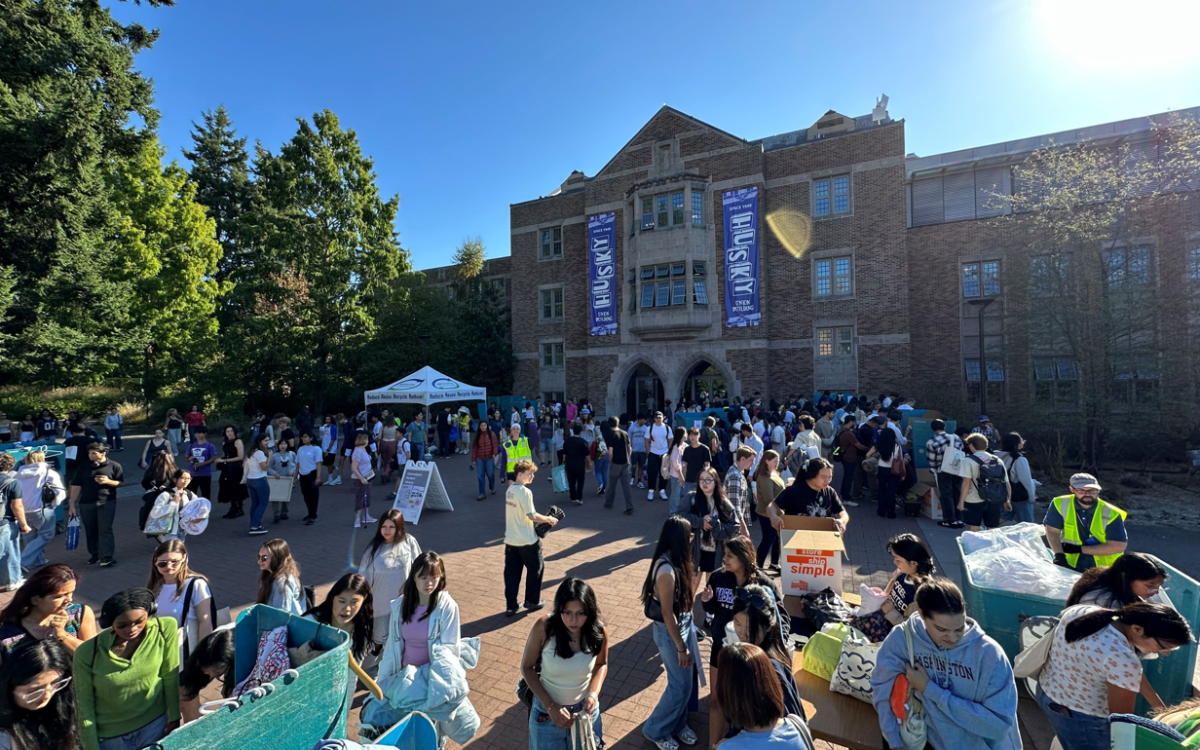

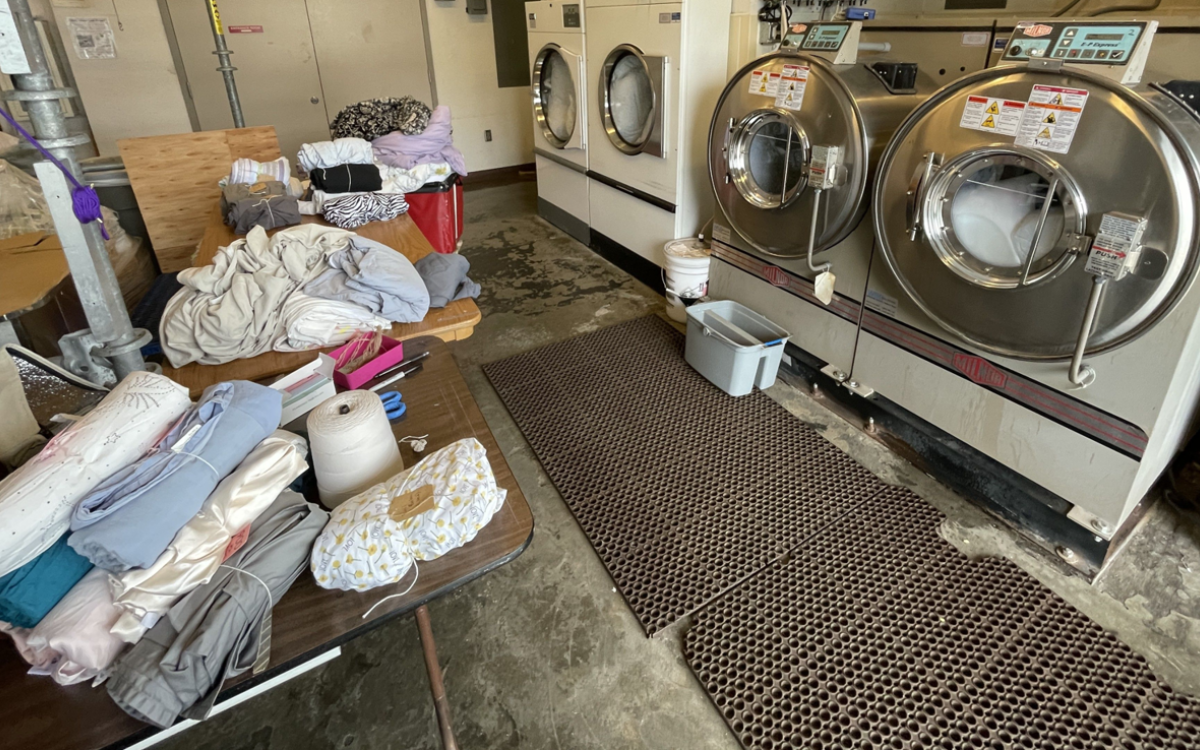
This UW Recycling project centers on expanding its SCRAM (student move-out) donation program. Adding a rented storage space will allow reusable items, especially high-demand essentials like bedding, to be collected, stored, and redistributed to students for free during Dawg Daze through Husky Goods Free Store events. Without additional storage, many usable items are currently discarded due to space limitations. This project reduces waste, lowers student costs, and addresses a clear need identified through a successful pilot where all donated bedding was quickly claimed. By scaling this effort, UW Recycling advances campus sustainability while laying the foundation for a long-term free store model that supports both environmental and student well-being. Funds will be used for the storage space costs.
UW Recycling is requesting funding to rent storage space at Sand Point for temporarily storing student donations from SCRAM (student move‑out in June). This storage will enable UW Recycling to expand a successful pilot conducted during Mini‑SCRAM 2025 (12-month move-out in August). Last year, donated goods were collected, sorted, stored short‑term, and redistributed to students for free during Dawg Daze through the Husky Goods Free Store event.
Currently, UW Recycling’s warehouse space is insufficient to store materials collected during SCRAM. Without additional storage, valuable reusable goods, particularly bedding, must be discarded despite strong student demand and clear sustainability benefits.
CSF funding will be used to lease storage space for approximately four months (June-September) through UW Real Estate. This space will allow UW Recycling to:
- Collect and retain donated items during SCRAM
- Sort and organize materials for redistribution (sorting will not be done at Sand Point, but having the additional storage allows more space for sorting in our warehouse)
- Hold inventory until students return to campus in September
The project will culminate in a series of Husky Goods Free Store pop‑up events during September, where students can acquire living essentials at no cost.
For context, student move‑out generates a significant amount of waste at UW, much of which is still usable. While UW Recycling can divert some donations to local nonprofit partners, certain materials, particularly bedding, cannot be recycled or accepted by donation partners and are typically sent to landfill because we don’t have space to store it until students move in.
At the same time, students face increasing financial pressures due to rising housing and grocery costs. Bedding is an essential but expensive item, especially for students moving into residence halls who require Twin XL sizes that are often discarded when students move off campus.
The September 2025 Husky Goods Free Store pop-up event pilot revealed that, despite initial uncertainty, used bedding is in extremely high demand. All pillows, sheets, comforters, and towels were claimed during Dawg Daze, confirming that this approach meets a real and urgent student need. With storage capability provided by the CSF grant, UW Recycling is able to collect bedding for redistribution.
By scaling a proven pilot into a larger, higher‑impact initiative, this project lays the groundwork for a permanent free “thrift” store model on campus and demonstrates the operational need for long‑term storage and redistribution infrastructure.
Liz Gignilliat
Project lead
- lizg9@uw.edu
- Affiliation
- Staff
- Affiliated groups
- UW Recycling, UW Facilities, UW SAP Materials and Waste Working Group
Request amount and budget
Plans for financial longevity
The need for off‑site storage occurs once annually during SCRAM. CSF funding will allow UW Recycling to demonstrate the scale, demand, and impact of expanding material redistribution to this high‑volume period.
By successfully scaling the Mini-SCRAM pilot to SCRAM, this project will build a strong case for ongoing institutional funding through Housing & Food Services or other UW departments. Our long‑term goal is to identify a permanent location for storage and pop‑up free store events by 2027.
This project serves as a proof of concept for a sustained, campus‑funded program that supports waste reduction, student affordability, and circular economy goals.
- June 1 2026: Lease begins at Sand Point storage location
- June 8–17 2026: Collect donations during student move‑out
- June 10–July 2 2026: Sort materials and transport items to storage
- Mid‑August–September 2026: Host a series of Husky Goods Free Store pop‑up events to redistribute donations to students during move‑in and Dawg Daze
- September 30: Lease ends at Sand Point storage location
Plans for long-term project management
This project is managed by UW Recycling’s full‑time staff, ensuring continuity and institutional knowledge beyond individual student involvement. UW Recycling has successfully operated student donation and move‑out diversion programs since 2004, demonstrating long‑term capacity and stability.
Because this project expands an existing program rather than creating a new one, no additional succession planning is required. Staff will continue to oversee logistics, partnerships, and operations year to year, with students supporting implementation through paid roles and volunteer opportunities.
Problem statement
Student move‑out generates a significant amount of waste at UW, much of which is still usable. While UW Recycling can divert some donations to local nonprofit partners, certain materials, particularly bedding, cannot be recycled or accepted by donation partners and are typically sent to landfill.
At the same time, students face increasing financial pressures due to rising housing and grocery costs. Bedding is an essential but expensive item, especially for students moving into residence halls who require Twin XL sizes that are often discarded when students move off campus.
The September 2025 Husky Goods Free Store pop-up event pilot revealed that, despite initial uncertainty, used bedding is in extremely high demand. All pillows, sheets, comforters, and towels were claimed during Dawg Daze, confirming that this approach meets a real and urgent student need.
This project addresses both environmental and economic challenges by keeping valuable materials in circulation and directly supporting students.
Problem context
This project aligns with UW’s broader efforts in the Sustainability Action Plan to build a thriving circular economy and reduce campus waste. Redistributing donated goods from SCRAM to students moving‑in complements existing UW Recycling initiatives such as donation collection, thrift swaps, and sustainability‑focused pop‑up events.
The Husky Goods Free Store also supports gaps identified by students participating in programs such as SEED and HuES, who have shared a need for easy access to donate, as well as free or low‑cost access to household essentials. By integrating redistribution into the move‑out/move‑in cycle, this project strengthens collective action and maximizes the value of existing sustainability infrastructure.
Measure the impacts
| Impact / goal | Metric(s) of success | UW stakeholders impacted |
|---|---|---|
| Waste diversion | 2,200 pounds of waste diverted from landfill | Undergraduate, Graduate |
| Student engagement | 1,500 students engaged | Undergraduate, Graduate |
Communication tactics and tools
UW Recycling will create original digital designs and messaging for use across multiple platforms, including Instagram posts, digital signage, blog posts, and printed posters. These materials will highlight sustainability impacts, student benefits, and event details, reinforcing UW’s commitment to waste reduction and student support.
Outreach communication plan
UW Recycling will widely promote the Husky Goods Free Store pop‑up events and the availability of free bedding and household items. Outreach will include HFS digital displays, posters in residence halls, first‑year program materials, departmental Instagram accounts, and the Dawg Daze calendar. These efforts will ensure broad visibility among incoming and returning students who will benefit most from the project.
Student involvement
The Husky Goods Free Store started as a Winter 2025 Program on the Environment capstone project, surveying students to determine interest and needs, researching goods sharing on the UW campus and on campuses throughout the US. Students play a key role in this project through paid employment supporting donation sorting, organization, and event operations. These roles provide hands‑on experience in sustainability operations, logistics, and community engagement while directly contributing to the project’s success.