At a glance
Peaks and Professors (Peaks) is a student-led Registered Student Organization that builds connections… Read full summary
- Funding received
- 2025-2026
- Mini
- Awarded
- $2,777
- Funding partners
-
- Services and Activities Fee (SAF)
- Website & social links
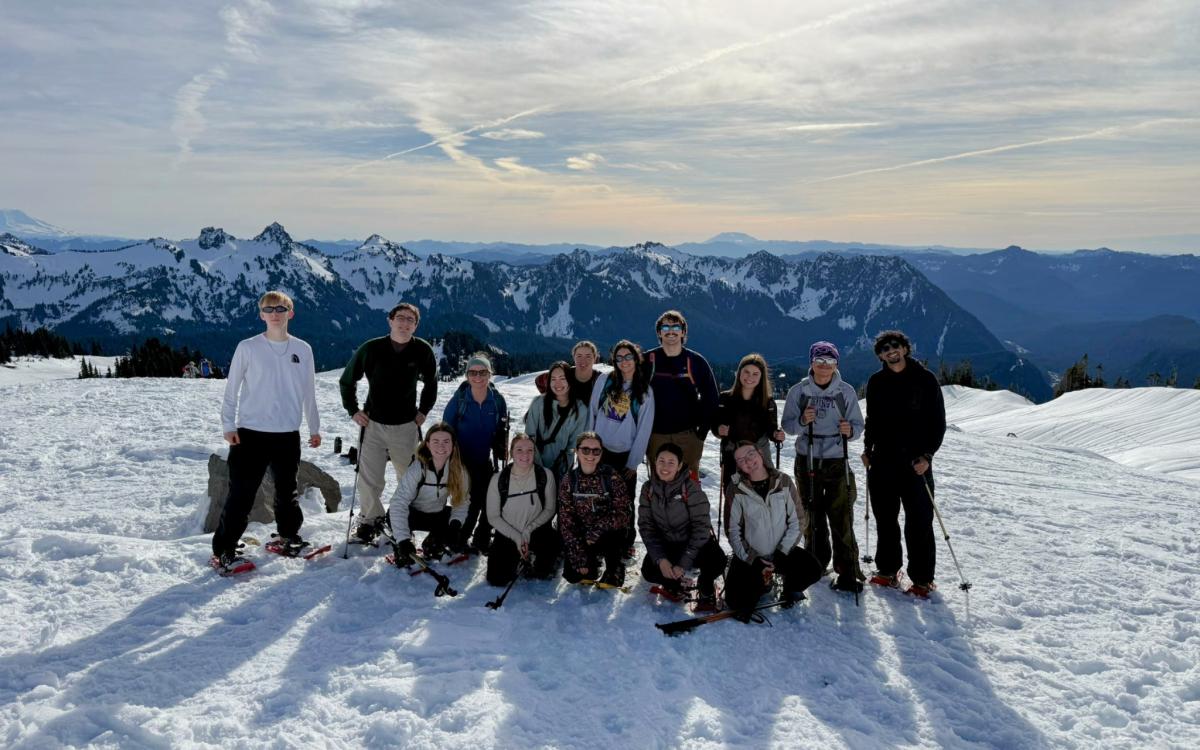
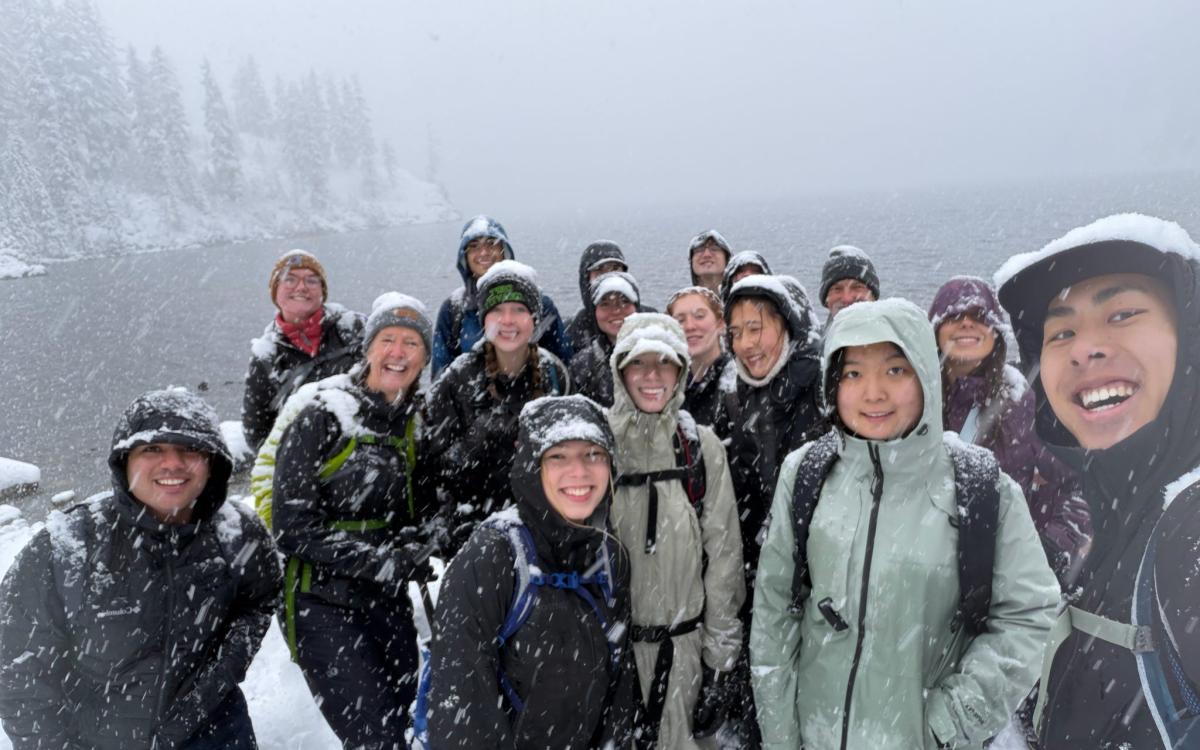
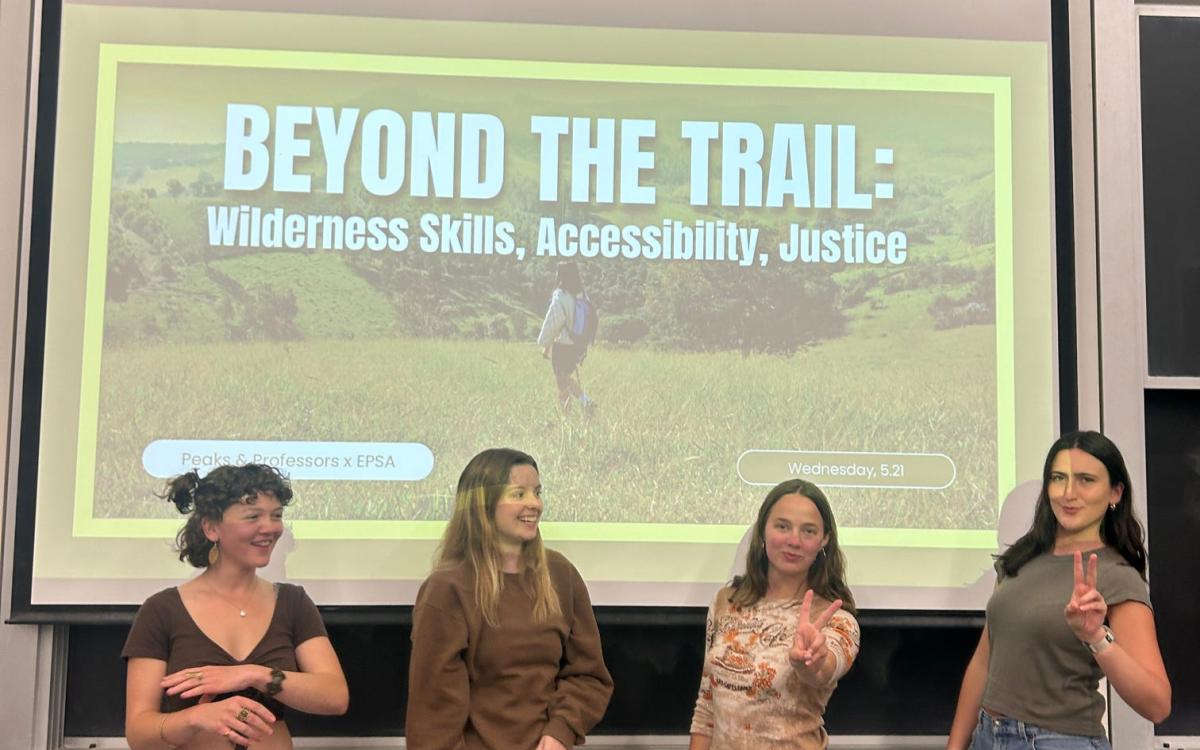
A Peaks community education night exploring accessibility in outdoor spaces.
Peaks and Professors (Peaks) is a student-led Registered Student Organization that builds connections between UW students and faculty through outdoor trips and shared experiences across Washington state. Through hiking trips, wellness walks, educational events, and community gatherings, Peaks creates opportunities for mentorship, community building, and learning outside traditional academic settings. With support from the Campus Sustainability Fund, Peaks will expand access to outdoor programming through a free gear library, quarterly trip scholarships, and new trip formats beyond day hiking. These initiatives will reduce financial and equipment barriers while creating opportunities for students with different interests, abilities, and levels of outdoor experience to participate. Peaks will also pilot a multi-day backpacking trip to strengthen relationships and encourage deeper engagement with nature, alongside a non-hiking trip such as kayaking or stand-up paddleboarding. Specifically, CSF funds support items for the gear library, student scholarships, and gear for kayaking and backpacking.
Peaks and Professors (Peaks) is a Registered Student Organization (RSO) dedicated to forming connections between students and faculty at the University of Washington through facilitating outdoor trips across Washington state. Through shared experiences and informal discussions, Peaks trips encourage deeper mentorship, community building, and learning ("Thinking Outside") than is often accessible in more formal academic settings.
Currently, Peaks leads two to four day-hiking trips per week during Fall and Spring quarters, each serving approximately eight participants. We also host larger wellness walks, educational events, and community gatherings near campus. However, participant fees for driver reimbursement, personal gear requirements, and a hiking-only model limit equitable access and restrict who feels able or interested in joining. Through participant feedback and observation, we have identified cost, gear access, and trip type as primary barriers to participation.
With CSF funding, Peaks will pilot three initiatives to expand accessibility and impact: (1) a free-to-loan gear library of hiking equipment, (2) a quarterly trip scholarship program, and (3) expanded trip offerings beyond day hiking. Together, these initiatives will reduce financial and logistical barriers while broadening the range of students who can participate.
Appropriate outdoor gear in the Pacific Northwest can be prohibitively expensive. While UW’s UWild Gear Garage provides valuable rental equipment, it lacks everyday essentials like hiking boots and rain jackets. Coordinating frequent weekend individual rentals can be costly and logistically challenging. Establishing a Peaks gear library will allow trip leaders to coordinate gear distribution directly, ensuring students can participate without personal equipment.
Additionally, Peaks will pilot $500 in quarterly trip scholarships (25 $20 awards) to offset transportation and participation costs. This will allow awarded participants to participate in about two fully-funded trips per quarter. We hope to expand this program and increase the award amounts in the future.
In addition to expanding access, Peaks will pilot a multi-day backpacking trip to deepen continuity and community impact. Peaks hikers sometimes comment on the lack of continuous ways to engage with Peaks or the people they meet on trips. While day trips broaden participation, multi-day experiences allow for sustained conversation, stronger peer and faculty relationships, and more meaningful connection to nature in a way that day hikes cannot, which will increase long-term impact and sustainability of Peaks programming. We will also pilot a non-hiking trip (e.g., kayaking/SUP) to broaden participation among students with varying physical abilities, interests, and prior outdoor experience, ensuring Peaks programming reaches a more diverse range of UW students.
Long-term, Peaks plans to sustain these initiatives (following reflection and adaptation as needed) through continued UW grant funding, external sponsorships, and partnerships, allowing us to institutionalize accessible outdoor programming that strengthens community, mentorship, and sustainability engagement across UW.
Caitlin Wassell
Project lead
- cwassell@uw.edu
- Affiliation
- Student
- Years
- 2.5 year(s) remaining at UW
- Affiliated groups
- Peaks and Professors
Request amount and budget
Plans for financial longevity
After CSF funding concludes, Peaks will sustain and grow the gear library, trip scholarships, and expanded programming through continued grant writing, external funding, sponsorships, and intentional fundraising efforts.
Our gear library will prioritize durable equipment sourced from retailers such as REI and Outdoor Prolink. With an estimated usage of six times per quarter, core items like hiking boots are expected to last three to five years. Replacement costs will be built into future grant proposals to ensure continuity and long-term access.
We are proposing this grant to facilitate a pilot of scholarships and expanded trips this spring quarter; we will offer 25 quarterly $20 scholarships, run one multi-day backpacking trip, and facilitate one kayaking trip. Long-term, we aim to offer $500 in scholarships and host two multi-day and two non-hiking trips during Fall and Spring quarters (our most active quarters). This requires approximately $5,000 annually to sustain.
To support this growth, Peaks plans to continue applying for CSF funding through both mini and larger grant pathways, secure 501(c)(3) umbrella sponsorship (e.g., through the Seattle Parks Foundation), and apply to external funders such as the REI Cooperative Action Fund. On an as-needed basis, Peaks will also pursue fundraising and brand sponsorship opportunities to ensure lasting accessibility.
1. Obtaining gear for gear library and HUB locker storage space: Early March, 2026.
- Purchase gear from REI and similar vendors.
- Inventory and label gear.
- Formulate a check-out and tracking system.
2. Gear Library Launch: Beginning of Spring quarter, 2026.
- Advertise gear availability
- Implement pilot check-out system, to be refined throughout quarter.
3. Trip scholarship Pilot: Spring quarter, 2026.
- Open applications at the start of the quarter.
- Award and distribute 25 $20 scholarships on a rolling basis to support Spring trip participation.
4. Multi-day trip pilot: Memorial Day weekend, May 2026.
- Rent and acquire gear from UWild Gear Garage.
- Advertise and select participants, faculty/professional guests, and location.
- Execute trip, reflect and refine for future trips.
5. Non-hiking trip pilot–SUP/Kayaking: Early June, 2026.
- Rent and acquire gear from UWild Gear Garage.
- Advertise, select participants, and refine as above.
6. Continuity planning: end of Spring Quarter, moving into future academic years.
- Assess pilot outcomes.
- Document and refine processes.
- Transition knowledge and delegate responsibilities to incoming leadership.
Plans for long-term project management
Peaks operates under a student-run, elected executive board (“P-Board”) composed of eight members who collaborate laterally and meet weekly to guide the direction of the organization. Leadership transition is built into our structure: new P-Board members are elected at the end of Winter quarter. Then, during Spring quarter, veteran and incoming board members overlap to facilitate transfer of knowledge, ongoing projects, and long-term goals.
Grant writing and fiscal oversight are led by the Head of External Communications and Head of Finance. To ensure continuity, these roles will maintain annotated grant archives, application timelines, budget templates, and written process guides. Incoming leaders will participate in joint meetings with current board members and relevant grant coordinators to ensure hands-on knowledge transfer. Similarly, expanded programming (e.g., multi-day trips) is overseen by the Head Trip Lead, who will document trip-planning frameworks, safety protocols, and logistical considerations for future leaders.
Each P-Board member also leads a quarterly project group composed of trip leads. Maintaining a standing grant committee under the Head of External Communications will ensure that grant-writing remains a recurring, shared responsibility rather than dependent on any single graduating leader.
Problem statement
Our project aims to address inequity related to outdoor access, discrimination, and bias in outdoor spaces. This inequity is driven by systemic barriers to access to time spent outside, such as poverty and lack of ownership of gear, which in turn negatively impacts health outcomes and community building. We hope to address the need to create structures that promote sustainable access to — and community within — nature, as well as access to the valuable lived experiences of the professors we hike with. We will address this by creating scaffolding for accessibility, including scholarships, gear repositories, trips beyond hiking, and multi-day trips to expand our scope and broaden Peaks’ impact. Our project idea is informed by direct interactions with the students we serve. Participants in events closer to UW, such as our wellness walks, have explicitly said that they were interested in Peaks’ longer trips, but didn’t attend due to a lack of gear, finances, or hiking experience/ability. Peaks is committed to fostering community between students and professors by giving people the opportunity to Think Outside, and reducing the financial burden of our hikes will expand access to students like these.
Problem context
By establishing a gear library, trip scholarships, and piloting multi-day and non-hiking trips, our project will expand outdoor accessibility while strengthening mentorship and community-building opportunities for UW students.
Existing organizations have made important strides in reducing financial and structural barriers to outdoor recreation. The UW Climbing Club maintains an internal gear repository and offers scholarships for mountaineering courses and trip participation. UWild provides limited rolling scholarships for First Year Adventures and outdoor programming. These efforts are critical in addressing longstanding inequities in access to outdoor spaces.
Similarly, robust mentorship, structural, and financial support infrastructure exists across the UW on-campus ecosystem. Programs such as the Brotherhood and Sisterhood Initiatives, Instructional Center, departmental peer mentoring, and OMAD all prioritize mentorship experience, access, and cross-disciplinary community for individuals traditionally underserved in academic spaces.
Peaks seeks to take inspiration from and complement these practices by intentionally bridging outdoor accessibility and mentorship in an informal, student-led setting. By lowering participation barriers and creating shared experiences in natural spaces, Peaks will foster genuine cross-generational conversation and professional connection in environments where individuals often feel more open and authentic. In doing so, Peaks strengthens coordination across UW’s outdoor and on-campus support systems, expanding equitable access to both nature and meaningful community.
Measure the impacts
| Impact / goal | Metric(s) of success | UW stakeholders impacted |
|---|---|---|
| # of individuals receiving trip scholarships | 25 students | Undergraduate, Graduate |
| # of items of gear provided and utilized (barrier removal) | 30 items of gear provided and accessible | Undergraduate, Graduate |
Communication tactics and tools
Our communication strategy will include a mix of online, in-person, and partnership-based tactics to maximize outreach and ensure information is accessible to all students. We will promote opportunities through Peaks’ social media platforms and collaborate with related student organizations so they can reshare posts and stories, expanding outreach beyond our typical audience. Email outreach will include our Peaks newsletter, as well as department newsletters and listservs, such as the Interdisciplinary Honors Newsletter. In-person outreach will involve tabling on campus to promote direct conversation and engagement. We will also share information through word of mouth about current trips, encouraging participants to invite friends who may be interested but not yet involved in Peaks. Another tactic we will utilize is the distribution of posters and flyers in dorms, campus buildings, and identity centers such as the Q-center and Kelly ECC. We will prioritize partnerships with these identity centers in order to connect with students who may not typically engage in hiking programs.
Outreach communication plan
We will promote our project through targeted outreach to groups at UW who are often underrepresented in outdoor recreation spaces, while also communicating within the existing Peaks community. By prioritizing outreach through campus entities like the Q Center and Kelly ECC, our approach emphasizes equitable access and diverse scope by ensuring information reaches students who may not view outdoor spaces as accessible or welcoming. Our project will support students and faculty who might not typically participate in our hikes due to financial, physical, or gear-related barriers. Additionally, it will benefit students seeking community through Peaks by offering expanded and more diverse outdoor opportunities that appeal to a wider range of students.
Student involvement
Peaks’ youth-led organizational structure–composed of trip leads and an elected executive board–fosters the development of leadership through hands-on experience in planning, risk management, fiscal competence, and group facilitation.
More broadly, for the UW student participant community, Peaks uniquely facilitates mentorship from guest faculty members and professionals. By providing informal outdoor spaces to learn and connect cross-generationally, students often bond with guests over shared interests, gain exposure to academic and career pathways, and receive networking opportunities.
Expanding Peaks’ accessibility and participation will increase equitable access to meaningful mentorship and professional development for students who may face barriers in more traditional settings.